A Great Thirty Minutes of a Family Weekend!

Dear Lindsey,

283,000 people in Chattanooga plus 513,000 in Dallas, plus 363,000 in Detroit, plus 318,000 in St. Louis.  Add hundreds of thousands in each of North Carolina, Florida, Texas, Arkansas, and Kansas to sum up a good year in 1953.  Two million in London (along with hundreds of thousands in a European tour, plus Nashville, New Orleans, among many) in 1954.  2.6 million in Scotland (along with hundreds of thousands in Canada and again in London, Paris among other European cities – and don’t forget tens of thousands at several locations of U.S. military bases) in 1955. How did one man have such an influence? Billy Graham spoke a Message to stadiums filled with people. The seeds planted by his preaching have grown around the world. Some receive accolades; others – just like anyone who makes a difference – receive criticism. But the message on this video points to One. I encourage you to watch.

“I am not told that I have to understand it all; I am told that I’m to believe, and anybody can believe. A blind man can believe. A deaf man can believe. An old person can believe. A young person can believe. And that word, ‘believe,’ means ‘commit.'”

The Cross


God bless,

Terri Brady

Related Posts

Why is There a Dead Bird on the Air Hockey Table?

Dear Lindsey,

I got off to a start this morning. My oldest drove himself to school. The next three kids and I loaded into the car before Chris was even downstairs for breakfast. Off to the appointments we headed when I got a text from Chris that changed my day:

“Why is there a dead bird on the air hockey table?”photo_2

Stopped at a red light, I read the text aloud to the kids in the car, sure that my backseat held the culprits.

“[silence]”

Suddenly, the 13-yr-old in the front seat was stifling giggles that refused their restraint and started sneaking through his pursed lips in bursts.

Shocked, and trying to be strict, I subdued the humor of the text – but my own choked laughter (holding up my cup to hide my smile) led to the coffee-down-the-wrong-pipe-choke, so I prayed the light would stay red for a while as I tried to get oxygen.

That’s when the back seat spoke with remorse:

“We felt bad it died yesterday in the back yard, and we were going to bury it…”

“…But the dog was going to eat it…”

“… we couldn’t find the shovel…”

“…then Nate asked if I would throw football…”

“…and I didn’t want to have a funeral without people…”

“…and then we left for evening church in a hurry…”

At eight and ten-years-old, their voices are undistinguishable, so I couldn’t tell which Dead Birdone was talking when (and I was seriously just trying to breathe again), but I got the gist of their story. I only wish that Chris had not been the first to find the carcass: a messy house drives him crazy! Although I can’t think of too many people that are happy when they find a dead bird on the air hockey table.

Irresponsible!

They are not getting this “pick up after yourself” thing that I have been teaching since before they were born!

Oh my…I cannot put into words to even speak to these two right now. They know what they did was wrong!

That’s when my thoughts of frustration were interrupted by a protective (or perspective) mechanism:

  • Thank You, God, that we found the dead bird on the air hockey table today, and not next week when guests are here.
  • Thank You, God, that my kids have good hearts that had compassion for Your creation. (I am glad they were not ruined by my roadkilling a few years ago.)
  • Thank You for a 13-yr-old who was mature enough to see it wasn’t a life-threatening, eternal consequences moment (but that he stifled his laughter until the lesson was taught).
  • Thank You that they put the thing in the bug cage, so at least if it had bugs on it, they were contained in the cage…and I hope that means they didn’t actually touch the dead bird.
  • Thank You for creating the birds that we could fall in love with, even when we don’t know them.
  • Thank You that I didn’t choke to death. (And thank You that the choking reminded me to say thank You that I don’t have a brain tumor…as it always reminds me now.)
  • Thank You that my children will never bring a dead bird in the house again. (I believe.)
  • Thank You that I have children.
  • Thank You for the dead bird on the air hockey table that reminded me of so much for which I can be thankful.

I think it’s ironic… I was trying not to get too bent out of shape, so I made a list in my mind of what to be thankful for (my normal redirection mechanism), and I ended up being thankful for the exact thing I was trying to reframe: the dead bird on the air hockey table.

When Bad Things Happen

I think the point here is that this mechanism is applicable to bigger issues than dead birds on the air hockey table. When I go through bad times (This began during my years of massive headaches while I had young toddlers!), I have a protective mechanism of listing things (at least three each time!) for which I am thankful. It is ironic to me the number of times when I am listing thankfulness to distract me from a problem – and give me perspective – that the list goes all the way back to thanking God for the exact problem with which I started: the dead bird on the air hockey table.

I suppose one of these days, I will be able to skip the “Why?…” part and get to the “Thank You, God for even this,” faster.

A friend, Jane Zempel, spoke at my church recently about “contentment.” She told a story of figuring out what one thing is so bad in life that you would want God to change. What one thing would you get rid of? If you were granted only one thing about yourself you could change, what would it be?

“Now thank God for that one thing,” she said.  “It’s amazing how when I did this, I had to force the words ‘thank You,’ but once they were said, enough times, I realized I could believe it.”

She went on to say that when we believe that God is sovereign over all, we can say thank You for even the things we don’t want, because we recognize God has a plan in even them.

When her son came home from school in tears (again) at age twelve, being teased as a “retard” for having Down Syndrome, she taught him this lesson of saying, “thank You,” even for Down Syndrome, because God had a purpose in his life. She saw that purpose thirty years later when her son told a doctor what a “blessing” Down Syndrome was to him…and it changed the doctor!

When things are rough….

When we can’t change it all…

or when we can’t change even one thing…

Let us give thanks.

Make the list now. To what do we owe God “Thank You”?

What if you woke up today with only the things for which you said thank You yesterday?” – Peter Bonner

I am thankful for you!

In love,

Terri Brady

“In every thing give thanks: for this is the will of God in Christ Jesus concerning you.” – 1Thes 5:18

“But godliness with contentment is great gain.”  1Tim 6:6

“I thank my God every time I remember you.” Phil 1:3

Related Posts

“Tending” to Forgive

Para español, haga clic aquí (coming soon)

Dear Lindsey

I recently wrote about our family’s trip to the state fair: A car – which had been left in neutral – had coasted through the parking lot, barely missing my husband and other pedestrians as it reached its destination: crashing into a parked car.  The “unattended car” rolling in neutral to whatever destination the slope led reminded me of many “unattended lives” who coast along in neutral, letting external circumstances determine their destination: a crash.  (See that post, Unattended Vehicles, here.)

PRNDLWhat if instead we put our PRNDL to “drive” – to reach our highest potential for God’s glory?! Purposefully tending to our lives (with God’s will) is the only way to fight our natural tendencies of decline.

When thinking of self-attending, we most likely think of the “eat right and exercise” driving that may avoid a health crash. Or maybe we think of driving the budget to avoid the slide toward excessive debt and bankruptcy. The media will often drive “unattended lives” down their slippery sin-sucking slope toward alcohol, infidelity or pornography among the rest. If we don’t attend to our children, the culture around us will gladly pull them.  Although the list of driving needs is endless: diet, budget, media, parenting, etc, I have recently come to admire the “skillful driving” that some Christians do in the area of

Forgiveness.

It is strange to think of someone driving forgiveness, but at the same time, unless purposefully attended, forgiveness will be lacking and lead to a major crash every time. A natural tendency to being wronged is taking offense, holding the offense, and even wanting revenge for the offense- THAT is the slope of the world in which we live. Lying awake all night unattended, the emotions drive the will of their possessor and result in bitterness, anger, negativity, broken relationships, physical problems and even rage.  I have massive regret when I think of the glory robbed from God every day that I have lacked forgiveness toward someone else.

One author says forgiveness is: never repeating the offense again – to the person it involves or anyone else.  Telling the story or thinking the story only gives the emotions new birth in their old state, removing the benefits of forgiveness altogether. Best selling author, Orrin Woodward once said, “To forgive doesn’t mean we think the snake will never bite again. It means we don’t have a desire to hurt the snake.” We pity the snake. We want to help the snake to become a new creature in Christ. I have often had to force myself to forgive someone who is at the same time holding an incredible grudge against me! But didn’t Christ already show me that it is possible through His own death, when He prayed about his killers, “Forgive them. They know not what they do.”?

Martin Lloyd Jones, in his book, Life in Christ, says that when our pride is in order, no one can insult us. “Whatever the world may say about me, when I know myself, I know that they do not know the truth about me – it is much worse than they think.  When we see ourselves in the light of this glorious gospel, no one can hurt us, no one can offend us.”

I truly believe that the condition of my heart – not the size of the offense – determines the level of difficulty in forgiving the offender. In essence, if my heart recognizes that I have needed forgiveness in the past, I am more likely to give forgiveness today. If my heart is full of pride as though, “I have never needed forgiveness;” “I am holier than they that offended,” or “I would never have done that,” then I am more likely to take great offense at the action and have more difficulty forgiving.  In other words I hold myself in a prison, while limiting the freedom of those around me. It is best said as the old saying: “Not forgiving is like taking poison and waiting for the other person to die.”

Those who forgive not only give themselves the gift of freedom from the past, but they bless everyone they meet with the same feeling of freedom.

My 13-year-old son recently read The Hiding Place, a book which details Corrie ten Boom’s time in a

Cover of "The Hiding Place"

concentration camp during WWII. (I highly recommend listening to an audio recording Ms. Ten Boom made a few years before her death. Just hearing her voice again this week brought tears to me, knowing the impact she had on my life when I first heard her on a recording a couple of decades ago.  My 13-yr-old and I listened on the way home from soccer, and sat in the driveway to finish it, because he didn’t want to turn it off.  Download the MP3, or order the CD, “The Greatest of These is Love”  Here. Although the audio recording is appropriate for all ages, the book shares details that may be best for older adolescents.)

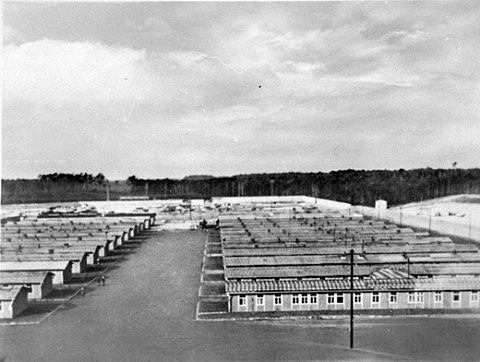
Caught in the act of hiding Jews, Ms. Ten Boom’s father, sister and she were taken Ravensbruck_camp_barracksaway to a hell on earth at Ravensbrück Concentration Camp that took the lives of both her father and her sister, while daily threatening her own. Mistreated, starved, and witness to unfathomable atrocities, she somehow was released days before the rest of her camp was marched into gas chambers to their death. I cannot imagine the bitterness that must have crept into her skin, thinking of the good she was trying to do for the Jewish people out of love, and the punishment she endured. I cannot conceive the haunting dreams that must have stolen her nights.  How must she have ached in mourning over the loss of her family, due to those purposeful acts of evil?

Somehow though, she was able to stay in the “driver’s” seat and “attend her life” anyway.

She steered her life with the Word of God, as she miraculously snuck a Bible into the concentration camp, though she was stripped naked and was watched by armed and vicious guards. (Would I have risked so much? Would I have even wanted the Bible enough to even try that?)

She accelerated her days against the negative slope with gratitude. At one point, she and her sister, Betsy, thanked God for the lice! Yes lice! Because they kept the guards from entering her sleeping quarters, and allowed them to study God’s Word together. (Am I as grateful even out of such grave circumstances?)

She shifted into higher gears by serving others. Instead of wallowing alone, or even just praying alone, she invited other prisoners to study with her, sharing her Bible – page by worn out page. (Do I have such a habit? – serving others instead of just meeting the needs of my family and me?)

She stayed on the right road, when she pitied the abusive guards and their lack of relationship with her Lord and Savior Jesus Christ. She focused on where she was headed, not where the slope of the world wanted to take her. With her eyes on Jesus, she could follow His example of “forgiving those who know not what they do.”

She didn’t focus inward on the downward slope of self.

She chose to heal.

She drove to forgive.

She glorified the God who attended to her all along.

Then she did even more. She recognized the “unattended lives” in the post-war community – even including the concentration camp guards themselves. She didn’t watch them ride downhill to their destined crash, but began telling them about the Word of God, the salvation in Jesus Christ, and how and why she was able to forgive. She famously was approached by one of the very guards from the concentration camp that took her father and sister.  Even though years had passed, you can imagine her hesitant feelings when she saw him.  Did it bring back horror and begin nightmares again? Did her eyes lock with his and cause trauma deep in her heart? Did she think of the force with which he struck, or recall the harshness of his words? Did bitterness surface at the memory of him with a full belly while surrounding prisoners went weeks without food, and were severely punished or killed if they took even a bite of the potatoes they were forced to pick?  After she thought she had forgiven, did emotions resurface when she was face to face with the offender?

Anguish over her sister’s and father’s deaths in that camp must have wrenched her insides to want to run… or shout… or hurt!

…but she dropped her emotions and embraced that very man, as he embraced the Christ she represented.

“In that moment,” she later wrote, “something miraculous happened. A current seemed to pass from me to him, while into my heart sprang a love for this stranger that almost overwhelmed me.”

She proved the Father’s forgiveness of sins when she looked beyond this stranger’s sins and was able to forgive.

Oh, to attend a life so well!

Corrie ten Boom would not have had a testimony, if at the beginning of the story, her “car” had been in neutral.  She would have followed a country’s leader, coasting on the pavement of his plans for evil, riding to whatever crash they led. She also would not have had a testimony if after all of the atrocities, she had “parked” in the prison of bitterness.

Her “attended life” before I was even born influenced my own to make sure I am

–       Steering with the Word of God

–       Accelerating with gratitude, culling surroundings for even the tiniest of blessings

–       Shifting into higher gears by serving others

–       Staying on the right road and pitying those who are not

–       Keeping my eye on the destination: in Christ Jesus.

We can drive forward, my dear friend!

In love,

Terri Brady

A scar is not all bad; it shows that a once open wound is now healed.

Romans 5:5And hope does not put us to shame, because God’s love has been poured out into our hearts through the Holy Spirit, who has been given to us.

Micah 7:18-19Who is a God like you, who pardons sin and forgives the transgression of the remnant of his inheritance? You do not stay angry forever but delight to show mercy.  You will again have compassion on us; you will tread our sins underfoot and hurl all our iniquities into the depths of the sea.

Related Posts:

Book References:

Audio Source

  • Corrie ten Boom’s story in her own words: “The Greatest of These is Love”  Here.

Unattended Vehicles

Para español, haga clic aquí (coming soon)

Dear Lindsey,

As we neared the fair grounds, the houses on the side streets had lawns decorated with parked cars. Big signs that said, “$10 parking” adorned their mailboxes at the road.

“Mom! Can we buy a house here? What a business asset the front yard would be!” Christine (age ten) said.  I can’t remember how I responded, but she concluded, “But I would only charge $9.”

Such an entrepreneurial-kid! (Thanks to Robert Kiyosaki’s books.)

The NC State Fair has become a family tradition that began two years ago: It was then that our newly arrived 10-week-old puppy was too new to be left at home, so she rode along.  Her presence only increased the excitement in the car (which didn’t need more excitement!) on our debut to the event. The State Fair, advertised to us for its deep-fried Oreos and Twinkies, (as if they needed hot oil to add to that “nutrition”!) with rides (which didn’t pass the two engineer-parents’ safety factor), stilt-walkers, Blue Grass bands, and the like, was sure to be a fun family day. Our children floated in excitement, while we tried to contain them in the Ford Expedition for the thirty-minute ride to the state capital’s fair grounds. My husband Chris opted for the N.C. State University football stadium parking lot with shuttles, instead of someone’s front lawn.

Hundreds, if not thousands, of cars were neatly arranged in diagonal rows. A yellow-vested worker guided us to the next relatively empty section, where Chris took the liberty of choosing a spot further away from all of the opening car doors.   Our truck’s doors opened like an explosion, opposite of the slow speed by which our children (and dog) unloaded. Chris came to my side of the car, barking out the normal arrival parental questions: “What’s taking so long to get out?!” “Why would you take your shoes off for such a short ride?” “Did you even bring shoes?”

Chris was bent over helping the youngest (age six at the time) tie his shoes, when suddenly the tone and urgency in his voice changed.

“HEEEYYY!” he yelled at a Toyota Corolla that slowly went by, barely missing Chris’s foot!

That’s when he and I noticed there was no driver in the car!

Some people, who were assumedly already riding the shuttle to the fair, had walked away, leaving their car in neutral.  The car was left on its own, silently drifting through a parking lot of families, heading for sure disaster. It was going slowly enough that Chris grabbed the door of the driver’s side, only to discover it was locked. Emergency mode was striking my heart as I tossed the puppy back into the truck and told the kids to sit tight. I ran alongside the passenger door of the runaway, realizing it too was locked. Our comfortable jog was becoming more of a sprint as the car, going slightly downhill, gained speed. Realizing there was no way to stop the car, (My heart is racing at the memory, just typing this.) Chris began focusing on trying to save the people in its path. “UNATTENDED CAR!” he yelled from his jog. Somehow I felt the need to translate the words for the average fair go-er, and I began yelling from my side, “HEEEYYYY! GET OUT OF THE WAY! THIS CAR HAS NO DRIVER! THIS CAR CAN’T STOP! GET OUT OF THE WAY!”

(Yes. My poor husband has taken much heat in our humor-filled family for his best-selling-author-ish choice of words, “unattended car!” since we were in a parking lot…full of “unattended cars.” But, I digress…)

A family, standing outside of their Jeep Cherokee (probably asking their kids where their shoes were), jumped out of the way before the silent killer passed. Fortunately, there were not many people in the path of the car, since it entered the parking section that had been filled hours earlier. We ran beside the car, yelling and working up a sweat, as it coasted to its final destination – crashing into a Honda Accord whose owners would be in for a not-so-fair ending to their day at the fair. Unattended Vehicles will be Towed at Owners Expense Sign-228x228

Unattended Lives

Driving away and laughing that day, thankful to have avoided what could have been a serious situation, I wondered how many times my life has been like the unattended Toyota Corolla. I have strolled through days (or years!) in neutral, allowing the grade of incline of my surroundings to determine my speed and destination.

  • The time at a job I just kept doing, afraid to change anything…
  • The times I was in a crowd of ladies, and I just kept listening, avoiding disagreement…
  • The times I allowed smoke from a conflict to be seen in the distance, without checking on the source of the fire…
  • The time I was done with college and said, “Yay! Now I never have to read another book!”

When we look around, “unattended lives” abound:

  • People who worship their dog or TV, rather than learning how to get along with others.  (Even the bumper stickers quip, “The more I know people, the more I like my dog.”)
  • Families who have never made an effort to keep a budget call out “unfair!” at anyone who has money.
  • Millions who stopped their learning once the government stopped requiring it (when they turned 16) and still get to vote.
  • Married people who think that because they wear a ring, they deserve loyalty from their spouse, so they no longer strive to please the one they married.

IMG_0431It makes me sad to see their vehicles plodding along, doomed to crash.  Unfortunately, innocent bystanders will have to deal with the ramifications of the crashes due to those “unattended lives.”

.

Attending to Life

How do we get life out of neutral?

Learning a little Latin and Greek with my homeschoolers has brought word meanings to mind: some for real, and some I just totally make up. (smile!) However, I did learn somewhere in there that “a” is put at the beginning of words to mean “opposite of.” So therefore, “attending to” would mean the opposite of “tending to.” In other words, the only way to make our lives go in the opposite direction of their fleshly tendencies (sin, laziness, etc.) is to attend to them.

An “attended life” is one in which someone…well…has the car in gear!

Someone who:

  • Determines a direction in which to aim, and then runs toward it. (Run the race set before us, to obtain the prize in Christ Jesus! Heb 12:1 )
  • Reads the right books, listens to audios and associates with people who are directionally correct.  (And let us not neglect our meeting together, as some people do, but encourage one another, especially now that the day of his return is drawing near. – Heb 10:25)
  • Understands that education is a lifetime adventure. As Orrin Woodward says, “Education is a lifetime assignment. It expires when we do.” https://twitter.com/Orrin_Woodward

Don’t get me wrong; life has many crashes, that are “accidents,” too. I would be wrong to say all bad outcomes are because we let go of the wheel. We cannot control negative outcomes, only our efforts toward positive ones.  As my father always taught me, “Do your best; angels can do no more.”  Too often, I have looked at the smoke rising from a crashed day in my life and thought, “I could have avoided that.”

Press On

I suppose in order to drive, we must press on the pedal. 🙂

“Not that I have already obtained this or am already perfect, but I press on to make it my own, because Christ Jesus has made me His own.” – Phil 3:12

“An unattended car may be dangerous, but an unattended life can be tragic.” – Chris Brady. https://twitter.com/RascalTweets

To paraphrase Ann Graham Lotz, “It’s painful to watch a Christian who has a saved soul, but is living a wasted, [unattended] life.”

Press on [the pedal], my dear friend!

Terri Brady

Related Posts